How to Build a Doctor and Healthcare Lead List
Learn how to build a structured doctor and healthcare lead list with better targeting, organized data, qualification, segmentation, and maintenance.

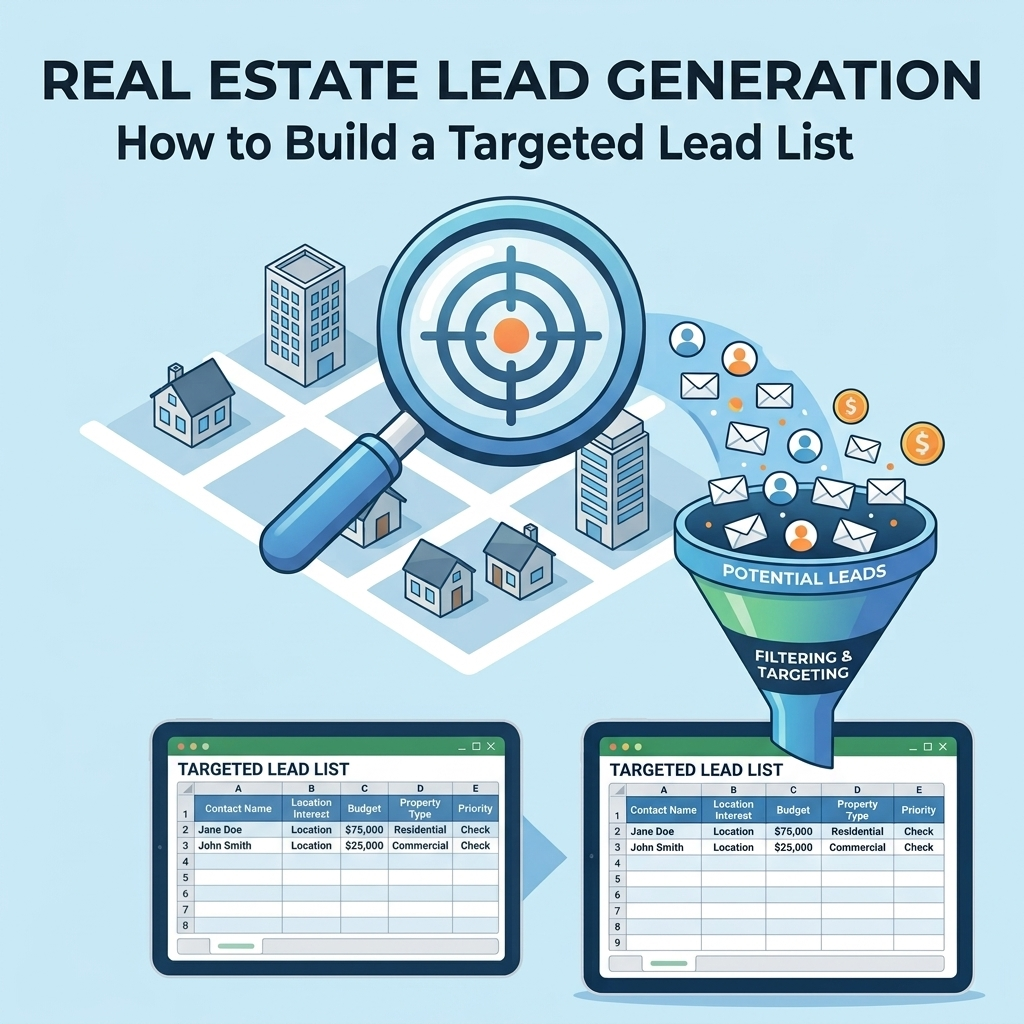
Building a doctor and healthcare lead list is more than collecting names and contact details. A useful list should identify the right healthcare organizations or professionals, organize relevant information consistently, and make the resulting data practical for prospecting and business development.
Whether you are building a list for a healthcare technology provider, medical supplier, professional service company, staffing business, or another B2B organization, the process becomes more manageable when you define the target before collecting and organizing records.
What Is a Doctor and Healthcare Lead List?
A doctor and healthcare lead list is a structured collection of prospective healthcare organizations, professionals, or business contacts that match defined targeting criteria.
The appropriate record type depends on the purpose of the campaign. A list might focus on individual doctors, medical practices, clinics, healthcare organizations, or a combination of organizations and relevant contacts.
A well-structured list can help a business:
- Identify healthcare prospects that fit a defined target profile.
- Organize organization and contact information consistently.
- Segment prospects into useful groups.
- Prioritize records for business development activities.
- Reduce duplicate and irrelevant records.
- Create a repeatable prospecting database.
1. Define Your Ideal Healthcare Prospect
Start by deciding exactly which healthcare prospects belong on the list. Without a clear target definition, list building can become a collection exercise with little connection to the actual sales process.
Depending on your business, useful targeting criteria may include:
- Geographic market.
- Healthcare specialty.
- Organization or practice type.
- Business size or organizational characteristics.
- Type of service provided.
- Relevant professional role.
- Other campaign-specific business requirements.
The criteria should be clear enough that different people can use the same definition when deciding whether a record belongs on the list.
2. Decide What Type of Healthcare Lead You Need
Healthcare lead generation can involve several levels of targeting. Decide whether the campaign needs organization-level records, individual professionals, or both.
| Lead Type | Useful When | Primary Record Focus |
|---|---|---|
| Healthcare Organization | The organization is the primary prospect | Organization name, location, website, specialty, business information |
| Doctor or Professional | A specific professional is the target | Name, specialty, organization, role, professional contact information |
| Organization and Contact | Both the business and relevant contact matter | Organization information connected to individual contact information |
Choosing the record structure at the beginning helps prevent a common problem: storing organization and individual information in the same fields and making the database difficult to maintain.
3. Define the Fields Before Collecting Leads
Create the database structure before collecting records. This gives the research process a consistent destination and makes later filtering, validation, and segmentation easier.
Organization-Level Fields
- Organization or practice name
- Website
- Business address
- City
- State
- Postal code
- Healthcare specialty or category
- Organization type
Professional or Contact Fields
- First name
- Last name
- Professional role
- Specialty
- Associated organization
- Professional email, where appropriate for the intended use
- Business phone, where appropriate for the intended use
Do not collect every possible field simply because it can be added to a spreadsheet. Select fields that support the intended prospecting workflow.
4. Define Your Geographic Target
Geographic targeting is often an important part of healthcare lead generation. A business may need prospects in specific states, cities, service territories, or other defined markets.
Use a consistent geographic structure such as:
- Country
- State
- City
- Metro area
- Service territory
Standardize geographic values before using them for segmentation. Consistency makes it easier to filter records and reduces confusion when information comes from different sources.
5. Segment Healthcare Prospects by Specialty
Healthcare is a broad market. A single undifferentiated list can make targeted prospecting difficult, especially when the product or service is relevant to only certain types of healthcare organizations or professionals.
Create practical specialty or healthcare-category fields based on the purpose of the campaign.
Useful segmentation can help teams:
- Build focused prospect groups.
- Organize business development activity.
- Tailor outreach to relevant audiences.
- Prioritize specific healthcare segments.
- Compare different prospect groups.
Keep the classification system consistent. If similar healthcare businesses are placed into several different categories without a clear reason, segmentation becomes less useful.
6. Choose and Document Your Data Sources
Determine where the prospect information will come from before starting large-scale list building. The source strategy should match the fields and targeting criteria you have already defined.
Potential source categories can include:
- Healthcare directories.
- Professional directories.
- Public business websites.
- Industry-specific sources.
- Existing business databases.
- Manually researched business information.
Keep source information organized when it is useful for later review. A documented source can make it easier to investigate a record when information needs to be checked or updated.
7. Separate Organization Data From Professional Data
Healthcare organizations can have multiple doctors or other professionals associated with them. For this reason, it is useful to distinguish the organization from the individual contact.
| Organization Information | Professional Information |
|---|---|
| Practice or organization name | Doctor or professional name |
| Organization website | Professional role |
| Organization location | Specialty |
| Organization category | Professional contact information |
This structure allows multiple professionals to be connected to one organization without unnecessarily repeating or changing the organization-level information.
8. Standardize Healthcare Lead Data
Information collected from different sources can use inconsistent formats. Standardization should therefore be part of the lead-building workflow.
Review fields such as:
- Organization names.
- Professional names.
- Specialty categories.
- Phone numbers.
- Email addresses.
- Street addresses.
- City and state values.
- Website domains.
For example, a healthcare organization should not appear as multiple separate prospects simply because different sources use slightly different formatting for its name.
9. Remove Duplicate Healthcare Leads
Duplicate records can appear when information is collected from multiple sources. If duplicates are not identified, the same organization or professional may appear several times in the prospecting database.
Depending on the database structure, potential matching fields may include:
- Organization name.
- Website domain.
- Business address.
- Professional name.
- Other relevant organization or contact identifiers.
Similar-looking records should not be merged automatically when the available information is insufficient to establish that they represent the same entity. Potential duplicates should be reviewed according to documented rules.
10. Create Healthcare Lead Qualification Rules
Not every record that enters the database should receive the same level of attention. Qualification rules help separate records that match the target from records that deserve further review or prioritization.
Depending on the campaign, qualification can consider:
- Fit with the target healthcare profile.
- Geographic relevance.
- Specialty relevance.
- Organization type.
- Contact-role relevance.
- Data completeness.
- Other campaign-specific criteria.
Document the rules before applying them so the same standards can be used throughout the database.
11. Build Practical Healthcare Lead Segments
Once records have been standardized and qualified, create segments that support actual business development decisions.
For example, a healthcare prospect database might be organized by combinations of:
- Geography.
- Healthcare specialty.
- Organization type.
- Professional role.
- Qualification status.
- Data completeness.
The purpose of segmentation is to make the database easier to act on. A useful segment should help answer a practical question about which prospects to review, prioritize, or process next.
12. Validate the Lead Records
Validation is an important step between collecting information and using the database for prospecting.
A basic validation workflow can include:
- Confirm that the record matches the target criteria.
- Review required fields for completeness.
- Check for obvious duplicates.
- Review organization and professional information for consistency.
- Flag records that need additional research.
- Separate records that should be excluded from the usable prospect list.
Keep the validation process documented so multiple people can apply the same standards.
13. Make the Database Easy to Use
A healthcare lead list should support the next business development action. If a team must manually reorganize every record before using it, the database is creating additional work instead of reducing it.
A practical database should make it easy to answer questions such as:
- Which healthcare organizations match the target profile?
- Which prospects are located in a specific market?
- Which specialties are represented?
- Which professionals are associated with each organization?
- Which records require additional validation?
- Which prospects have already been processed?
14. Document the Healthcare Lead-Building Process
Documentation makes the process easier to repeat and maintain. It also reduces the risk of different researchers applying different definitions to the same database.
Document at least:
- Target healthcare prospect definition.
- Required database fields.
- Data source categories.
- Standardization rules.
- Duplicate detection rules.
- Qualification criteria.
- Segmentation rules.
- Validation steps.
- Maintenance responsibilities.
15. Maintain the Healthcare Lead List
Creating the database is only one part of lead-list management. Business information can change, professionals can move between organizations, and records can stop matching the original target criteria.
Establish a review process appropriate to the database and its intended use. During reviews, look for:
- Duplicate records.
- Incomplete records.
- Irrelevant prospects.
- Changed organization information.
- Changed professional information.
- Records that no longer meet the qualification criteria.
Doctor and Healthcare Lead List Checklist
Before using a healthcare prospect database for business development, review the following checklist:
| Checklist Item | Ready? |
|---|---|
| Target healthcare prospect is clearly defined | Yes / No |
| Organization and professional records are structured separately | Yes / No |
| Required fields are documented | Yes / No |
| Geographic targeting is standardized | Yes / No |
| Healthcare specialty categories are consistent | Yes / No |
| Potential duplicate records have been reviewed | Yes / No |
| Qualification rules are documented | Yes / No |
| Records have gone through the defined validation process | Yes / No |
| Segments support actual prospecting workflows | Yes / No |
| Database maintenance responsibilities are defined | Yes / No |
Common Doctor and Healthcare Lead List Mistakes
Building the List Without Defining the Target
Collecting healthcare records before deciding what qualifies as a prospect can create a large but difficult-to-use database.
Mixing Organizations and Professionals
Storing practice information and individual professional information in the same structure can make filtering, updating, and duplicate detection more difficult.
Using Inconsistent Specialty Categories
Similar specialties can become fragmented across multiple categories when there is no standard classification approach.
Ignoring Duplicate Records
Duplicate organizations or professionals can create unnecessary work and make the database less reliable for prospecting.
Skipping Validation
A record should not be treated as ready simply because it was collected. A defined validation process provides a consistent way to review data quality and targeting fit.
Failing to Maintain the Database
A lead list can become less useful over time if there is no process for reviewing changes, duplicates, incomplete records, and prospects that no longer match the target.
How to Build a Doctor and Healthcare Lead List Step by Step
- Define the target: Specify the healthcare organizations and professionals that qualify as prospects.
- Choose the record type: Decide whether the campaign needs organization-level, professional-level, or linked records.
- Define required fields: Establish the database structure before collecting information.
- Select data sources: Identify source categories that match the targeting requirements.
- Collect prospect records: Gather the required organization and professional information.
- Standardize the data: Apply consistent formatting and classifications.
- Deduplicate: Identify and review potential duplicate records.
- Qualify and validate: Apply the documented targeting and data-quality rules.
- Segment the database: Organize qualified records into useful prospect groups.
- Maintain the list: Review and update the database according to a defined process.
When to Use External Healthcare Lead Generation Support
Building a healthcare prospect database internally can involve research, data organization, validation, segmentation, and ongoing maintenance. External support can be useful when a business needs a structured lead-generation workflow without handling every operational step internally.
BrainyFlavors provides lead generation services for businesses that need support with prospect research, lead data organization, and repeatable lead-generation workflows.
Final Takeaway
A useful doctor and healthcare lead list starts with a clearly defined target and continues through structured data collection, standardization, qualification, segmentation, validation, and maintenance.
The goal is not simply to collect more healthcare records. The goal is to create a practical prospecting resource that helps a business identify relevant organizations and professionals, organize information consistently, and move qualified prospects into the next stage of its business development process.
Written by
Ashraful Haque
Process Improvement Consultant & Operations Specialist with expertise in Lean Six Sigma, financial workflows, and business intelligence systems.
Comments
Leave a comment
Comments are moderated and will appear after approval.
Recommended Products
Taja Weekly To Do List Notepad with 52 Undated Sheets (8.5×11) - Weekly Desk Planner for Women & Man, Work and Home - 1 Pack Violet Dream
A practical undated weekly planner for organizing tasks, priorities, and routines without being locked into a calendar year.
Check Price
Weekly To Do List Notepad with 52 Undated Sheets (8.5×11) - Undated Weekly Planner Notepad for Office Desk Accessories and Supplies - Midnight Lilac
A simple weekly planning pad that turns a busy workload into a clear visual list, making priorities easier to capture and track.
Check Price
202 Cashflow Game - Rich Dad Poor Dad Robert Kiyosaki Game Robert Kiyosaki Cashflow Board Game + Free Expredited Shipping
A financial strategy board game built around cash-flow concepts, offering an interactive way to explore money decisions, income, expenses, and investing.
Check PriceRelated Articles
Analyze Phase: A Complete Practical Guide
A practical guide to the analyze phase, from defining the problem and reviewing data to validating findings and turning analysis into action.
Read Article →Supply Chain Analytics Tools & Software: What to Choose
Compare supply chain analytics tools and software by use case, data needs, integrations, dashboards, and implementation priorities.
Read Article →Logistics Operations Software: A Practical Guide
A practical guide to logistics operations software, covering core workflows, capabilities, implementation, data, automation, and software selection.
Read Article →