In-House vs. Outsourced Bookkeeping: Which Is Best? (2026)
Choosing the right financial management model is critical for sustainable growth. Compare the benefits and drawbacks of in-house and outsourced bookkeeping.
The Strategic Financial Dilemma
As a small business begins to scale, the complexity of its financial data grows exponentially. Managing receipts, invoices, and bank reconciliations often becomes a full-time job that pulls leadership away from core revenue-generating activities. The decision between in-house vs. outsourced bookkeeping is more than a simple cost comparison: it is a choice about the future of your operational infrastructure. Without a clear data strategy, organizations risk creating "Muda" (waste) through inefficient tracking and delayed reporting.
Achieving Operational Excellence in finance requires a system that is both accurate and scalable. By moving away from "tribal knowledge" and toward standardized workflows, you build a foundation for business improvement. This guide provides a professional framework to help you decide which model aligns best with your company's growth targets in 2026.
Strategic Comparison: Internal Control vs. External Expertise
| Feature | In-House Bookkeeping | Outsourced Bookkeeping |
|---|---|---|
| Control and Access | Immediate physical access to records. | Cloud-based digital access only. |
| Average Cost | Higher (Salary, benefits, and desk space). | Lower (Hourly or flat monthly fee). |
| Scalability | Limited by staff hours and bandwidth. | Highly flexible as transaction volume grows. |
| Fraud Protection | Lower (Internal risk of collusion). | Higher (Third-party oversight). |
Evaluating the In-House Model
In-house bookkeeping involves hiring an employee to manage your financial records directly from your office. This model is often preferred by owners who value "immediate proximity" to their documents. Having a staff member on-site allows for real-time collaboration on purchasing decisions and inventory tracking. However, the "hidden costs" of this model include payroll taxes, benefits, and the time required for management oversight.
To succeed with an internal hire, you must focus on documenting business processes to ensure consistency. Without a Standard Operating Procedure (SOP), an internal bookkeeper may develop idiosyncratic habits that make it difficult to transition if they leave the company. This creates a "single point of failure" that can destabilize your financial health.
Leveraging Outsourced Expertise
Outsourcing involves hiring an independent freelancer or a professional firm to manage your books remotely. This model leverages specialized knowledge and modern technology, such as QuickBooks or Xero, to automate data entry. Outsourced providers often offer a higher level of security and fraud detection because they act as an objective "third party" reviewing your transactions.
For businesses aiming for Smarter Improvement, outsourcing provides access to an "on-demand" team of experts without the long-term commitment of a salary. This allows you to scale your support up or down based on your seasonal needs: providing a much more efficient use of capital. It is an ideal solution for entrepreneurs who want to focus on high-level strategy rather than clerical checking.
Recommended Resources for Financial Leaders
Managing the transition between these two models requires high levels of professional organization and a clear strategic mindset. We recommend the following tools for managers dedicated to tracking and driving success.
1. LLC Beginner's Guide
Bookkeeping is significantly easier when your legal structure is solid from day one. This all-in-one guide covers tax hacks and legal strategies for new company owners: ensuring you build your business on a firm foundation.
Best for: New Entrepreneurs
View Guide on Amazon2. Professional Portfolio
When you are interviewing bookkeeping firms or presenting reports to the board, professionalism builds trust. This high-quality vegan leather portfolio keeps your tablet, notes, and plans organized in one secure place.
Best for: Consultants and Executives
View Portfolio on AmazonFrequently Asked Questions
When should a business move from DIY to professional bookkeeping? Most businesses should make the switch when they reach 50 or more transactions per month. At this point, the time spent by the owner on data entry exceeds the cost of hiring a professional.
Is outsourced bookkeeping secure? Yes: professional firms use encrypted cloud platforms and follow strict data privacy protocols. Outsourcing often provides better security than a local computer that lacks enterprise-grade backups.
Can I have a "hybrid" model? Absolutely. Many businesses use an internal office manager to handle "source documents" (receipts and bills) and an outsourced firm to perform the final reconciliations and financial reporting.
Which model is better for tax season? Outsourcing is generally more efficient for tax season because professional firms provide "audit-ready" books that can be handed directly to a CPA: reducing the hours needed for tax preparation.
Written by
Ashraful Haque
Process Improvement Consultant & Operations Specialist with expertise in Lean Six Sigma, financial workflows, and business intelligence systems.
Comments
Leave a comment
Comments are moderated and will appear after approval.
Recommended Products

Paycheck to Billionaire: Master Financial Freedom, Smart Investing & Cost Management Board Game, Educational Play, Perfect for Boys and Girls Ages 8+, Adults and Family
An educational board game that turns financial concepts into interactive play, making conversations about investing, spending, and money management more engaging.
Check Price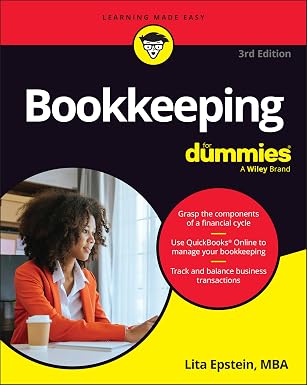
Bookkeeping For Dummies (For Dummies: Learning Made Easy)
A friendly, practical introduction to bookkeeping fundamentals - ledgers, journal entries, and everyday financial record-keeping made approachable for beginners.
Check Price![LLC Beginner's Guide [All-in-1]: Everything on How to Start, Run, and Grow Your First Company Without Prior Experience. Includes Essential Tax Hacks, Critical Legal Strategies, and Expert Insights](https://m.media-amazon.com/images/I/41o3X44QPLL._SS135_.jpg)
LLC Beginner's Guide [All-in-1]: Everything on How to Start, Run, and Grow Your First Company Without Prior Experience. Includes Essential Tax Hacks, Critical Legal Strategies, and Expert Insights
A beginner-friendly roadmap for starting, running, and growing an LLC, with practical guidance on business setup, taxes, and legal essentials.
Check PriceRelated Articles
Internal Controls Strategies: Advanced Best Practices
Learn advanced internal controls strategies for improving approvals, reconciliations, segregation of duties, monitoring, documentation, and accountability.
Read Article →Continuous Improvement Mindset: A Guide to Success
Discover how a continuous improvement mindset helps businesses solve recurring problems, engage employees, improve processes, and achieve sustainable growth.
Read Article →Multi-Carrier vs Single-Carrier Shipping: Which Is Better?
Compare multi-carrier and single-carrier shipping to choose a strategy that balances transportation costs, delivery reliability, flexibility, and operational complexity.
Read Article →