Supplier Relationship Management Best Practices Guide
Learn practical supplier relationship management best practices for improving supplier performance, communication, risk control, and operational reliability.
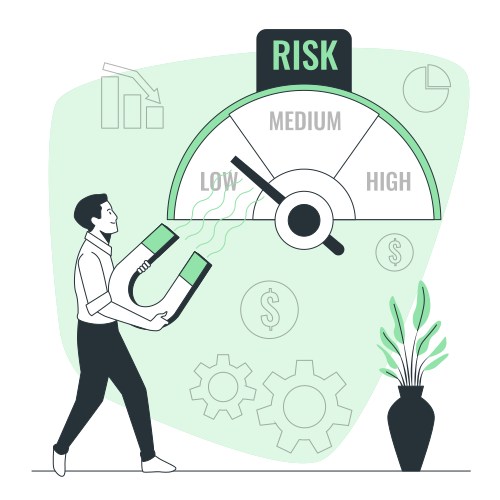
Supplier relationships affect more than purchasing. The way a business selects, communicates with, evaluates, and works with suppliers can influence inventory availability, cash flow, operating costs, service quality, and the ability to respond to changing demand.
Supplier relationship management (SRM) provides a structured way to manage those relationships. Instead of treating every supplier interaction as a one-time transaction, SRM creates a repeatable process for setting expectations, monitoring performance, resolving problems, and improving collaboration.
This guide explains practical supplier relationship management best practices that small and growing businesses can use without creating an unnecessarily complicated procurement system.
What Is Supplier Relationship Management?
Supplier relationship management is a structured approach to managing interactions and business relationships with suppliers. It covers activities such as supplier selection, onboarding, communication, performance monitoring, issue resolution, risk management, and ongoing improvement.
The goal is not simply to maintain friendly relationships with vendors. The goal is to create a reliable business process in which both sides understand requirements, responsibilities, performance expectations, and escalation procedures.
A practical SRM process can help a business answer questions such as:
- Which suppliers are most important to the business?
- What does acceptable supplier performance look like?
- How should supplier issues be reported and resolved?
- Which supplier risks need regular monitoring?
- How often should supplier performance be reviewed?
- Where can supplier-related costs or delays be reduced?
Why Supplier Relationship Management Matters
A supplier can affect several parts of an operating business at the same time. A late delivery may create an inventory problem. An inaccurate invoice may create an accounts payable issue. Poor product quality may create additional inspection, returns, or customer service work.
SRM helps connect these issues instead of treating each one as an isolated event.
| Supplier Management Area | What to Manage | Business Benefit |
|---|---|---|
| Performance | Delivery, quality, responsiveness, and agreed requirements | More predictable operations |
| Communication | Contacts, updates, meetings, and escalation paths | Faster issue resolution |
| Financial controls | Invoices, purchase records, payment terms, and discrepancies | Better purchasing and cash-flow visibility |
| Risk | Dependency, supply interruptions, quality problems, and operational exposure | Greater business resilience |
| Improvement | Recurring problems, root causes, and corrective actions | Continuous improvement |
1. Segment Suppliers by Business Importance
Not every supplier requires the same level of management. Spending equal amounts of time on every vendor can make SRM unnecessarily expensive and difficult to maintain.
Start by identifying which suppliers have the greatest operational or financial importance. Consider factors such as:
- Dependence on the supplier
- Impact of a supply interruption
- Importance of the supplied product or service
- Quality requirements
- Annual purchasing activity
- Availability of alternative suppliers
- Lead-time requirements
- History of supplier performance problems
A simple supplier segmentation model can use categories such as strategic, important, routine, and low-impact suppliers. The exact categories should reflect the business rather than being copied from a generic procurement framework.
2. Maintain a Central Supplier Record
Supplier information should not be scattered across email threads, spreadsheets, accounting records, and individual employees' notes.
Create a central supplier record containing the information the business actually needs to manage the relationship.
Useful Supplier Record Fields
- Supplier name and business contact information
- Primary and backup contacts
- Products or services supplied
- Supplier category
- Payment terms
- Typical lead time
- Order and delivery requirements
- Performance review history
- Known operational risks
- Open issues and corrective actions
- Internal owner responsible for the relationship
For businesses managing many suppliers, a structured CRM setup and support process can help organize relationship information and make supplier communication easier to manage.
3. Define Supplier Expectations Before Problems Occur
Many supplier disputes begin because expectations were unclear from the start. A business may assume that a supplier will provide a certain delivery schedule or quality level while the supplier has a different understanding.
Document important expectations before regular transactions begin.
| Expectation | Questions to Clarify |
|---|---|
| Delivery | When should orders be delivered and how are delays communicated? |
| Quality | What specifications or acceptance requirements apply? |
| Communication | Who should be contacted when an issue occurs? |
| Documentation | What information should accompany an order, delivery, or invoice? |
| Problem resolution | How are discrepancies, defects, and delays escalated? |
| Changes | How should changes to orders, specifications, or schedules be approved? |
4. Establish Clear Supplier Communication
Good supplier communication is not about communicating constantly. It is about making important information timely, clear, and traceable.
Define who communicates with the supplier and what type of information should be shared. For important suppliers, establish a regular review process instead of contacting them only when something goes wrong.
A Practical Communication Structure
- Routine communication: Orders, delivery updates, invoices, and day-to-day questions.
- Issue communication: Delays, quality problems, discrepancies, and corrective actions.
- Performance reviews: Periodic discussion of performance, recurring issues, and improvement opportunities.
- Strategic communication: Major changes in demand, capacity, products, business requirements, or supplier relationships.
Keep important decisions and commitments documented. This reduces confusion when employees change roles or multiple teams interact with the same supplier.
5. Create a Supplier Performance Scorecard
Supplier performance should be evaluated using defined criteria rather than personal impressions.
A supplier scorecard can track the measures that matter most to the business. Common areas include:
- On-time delivery
- Order accuracy
- Product or service quality
- Responsiveness
- Issue resolution
- Invoice accuracy
- Compliance with agreed requirements
Not every supplier needs every metric. Choose measures that reflect the supplier's actual role in your operation.
Example Supplier Review Framework
| Area | Review Question | Follow-Up |
|---|---|---|
| Delivery | Are orders arriving according to agreed requirements? | Investigate recurring delays. |
| Quality | Are goods or services meeting specifications? | Document defects and corrective actions. |
| Responsiveness | Does the supplier respond when information is needed? | Clarify communication responsibilities. |
| Accuracy | Do orders, deliveries, and invoices match? | Investigate recurring discrepancies. |
| Improvement | Are recurring problems being addressed? | Agree on corrective actions and owners. |
6. Connect Supplier Management With Inventory Planning
Supplier performance and inventory management are closely connected. If a supplier has inconsistent lead times, the business may need to account for that uncertainty when planning purchases and inventory.
Supplier reviews should therefore consider how supplier performance affects stock availability and replenishment decisions.
Businesses with more complex purchasing and stock requirements can also connect SRM practices with inventory management processes. This can help align supplier information with purchasing and stock decisions instead of maintaining separate records.
7. Monitor Supplier Risk
Supplier risk is not limited to whether a vendor is financially stable. A supplier can create operational risk through limited alternatives, long lead times, inconsistent quality, communication problems, or dependence on a single source.
Create a simple supplier risk review based on the risks that matter to your business.
Questions for Supplier Risk Reviews
- What happens if this supplier cannot deliver?
- How quickly could an alternative supplier be identified?
- Are there critical products or services available from only one supplier?
- Does the supplier have a history of recurring performance problems?
- Could a supplier delay affect customers or internal operations?
- Are important supplier contacts and records documented?
- Does the business have a contingency approach for critical supplies?
The purpose of this review is not to eliminate every possible risk. It is to make important dependencies visible so the business can decide where additional controls are appropriate.
8. Review Supplier Costs Beyond the Purchase Price
The lowest quoted purchase price does not automatically represent the lowest total business cost.
Supplier evaluation can also consider costs associated with late deliveries, defects, returns, emergency purchasing, additional handling, invoice corrections, and administrative work.
A broader cost review helps purchasing teams understand how supplier performance affects the rest of the business.
| Cost Area | What to Examine |
|---|---|
| Purchase cost | Quoted or agreed price |
| Delivery | Freight, delivery requirements, and unexpected charges |
| Quality | Inspection, returns, rework, or replacement activity |
| Delay | Additional operational work caused by late supply |
| Administration | Time spent correcting orders, invoices, and supplier records |
9. Keep Accounts Payable and Supplier Records Aligned
Supplier relationship management also has a financial control component. Supplier records, purchase documentation, invoices, and payment information should remain consistent.
When supplier information is incomplete or inconsistent, businesses may spend unnecessary time resolving invoice discrepancies and payment questions.
A structured accounts payable process can support supplier management by keeping supplier invoices and payment workflows organized.
10. Create a Formal Issue-Resolution Process
Supplier problems are inevitable. The important question is how consistently the business handles them.
A simple issue-resolution process can prevent repeated discussions about the same problem.
- Record the issue: Document what happened and when.
- Confirm the impact: Identify the operational, financial, or customer impact.
- Contact the supplier: Share the relevant facts and supporting information.
- Identify the cause: Determine why the problem occurred.
- Agree on corrective action: Define what will change and who owns the action.
- Set a follow-up date: Confirm whether the corrective action worked.
- Update the supplier record: Preserve the outcome for future reviews.
This approach shifts the conversation from blame toward documented problem solving while maintaining accountability.
11. Use Regular Supplier Business Reviews
Important supplier relationships should not be reviewed only after a major failure.
A supplier business review can bring performance information, open issues, upcoming requirements, and improvement opportunities into one discussion.
Suggested Review Agenda
- Recent supplier performance
- Open issues and corrective actions
- Delivery and quality concerns
- Upcoming demand or operational changes
- Communication problems
- Process improvement opportunities
- Actions, owners, and follow-up dates
The frequency should depend on supplier importance and business needs. Strategic suppliers may need more structured reviews than routine suppliers.
12. Assign Internal Ownership
Supplier management often fails when everyone assumes someone else is responsible.
Each important supplier should have a clearly identified internal owner. That person does not necessarily need to handle every transaction. Their role is to make sure the relationship has an accountable point of contact.
The owner can coordinate supplier reviews, monitor open issues, maintain important information, and involve finance, operations, inventory, or other teams when necessary.
13. Build a Supplier Improvement Process
Supplier relationship management should not stop at measuring performance. The information collected should lead to useful action.
For recurring supplier problems, ask:
- What pattern is appearing?
- Is the problem caused by the supplier, the buyer, or the process between them?
- Are requirements clear?
- Is information reaching the supplier at the right time?
- Does the supplier have the information needed to perform correctly?
- What corrective action should be tested?
- How will the business determine whether the problem has been resolved?
This turns supplier management into an ongoing improvement cycle rather than a periodic administrative task.
14. Avoid Common Supplier Relationship Management Mistakes
Managing Every Supplier the Same Way
A small office-supply vendor and a critical supplier should not necessarily receive the same level of monitoring. Segment suppliers according to business importance and risk.
Focusing Only on Price
Price matters, but delivery reliability, quality, responsiveness, administrative effort, and supply continuity can also affect total business cost.
Keeping Supplier Information in Personal Files
Supplier knowledge should remain accessible to the business rather than depending on one employee's inbox, spreadsheet, or memory.
Waiting Until Problems Become Serious
Regular performance reviews make it easier to identify recurring issues before they become larger operational problems.
Using Too Many Metrics
A supplier scorecard should support decisions, not create unnecessary administrative work. Focus on measures that are relevant to the supplier's role.
Failing to Track Corrective Actions
Identifying a problem is not the same as resolving it. Assign an owner, define the corrective action, and establish a follow-up process.
Supplier Relationship Management Checklist
Use this checklist to assess the maturity of your current supplier management process.
- Supplier records are maintained in a central location.
- Important suppliers are segmented by business importance.
- Key supplier contacts are documented.
- Important delivery and quality expectations are clearly defined.
- Supplier performance is reviewed using consistent criteria.
- Supplier issues are documented and tracked.
- Corrective actions have assigned owners.
- Critical supplier dependencies are identified.
- Supplier information supports inventory and purchasing decisions.
- Supplier invoices and payment records are properly organized.
- Important supplier relationships have regular review meetings.
- Supplier performance data is used to identify improvement opportunities.
How to Build an SRM Process for a Small Business
A small business does not need a large procurement department or complex technology to begin supplier relationship management.
Start with a manageable process:
- List your suppliers: Create one current supplier register.
- Identify critical suppliers: Determine which relationships require more attention.
- Document expectations: Record important delivery, quality, communication, and documentation requirements.
- Choose a few useful metrics: Focus on measures that support real decisions.
- Track problems: Create a consistent process for recording issues and corrective actions.
- Review performance: Establish a practical review schedule for important suppliers.
- Connect supplier data: Where possible, align supplier information with inventory, accounts payable, and operational workflows.
- Improve the process: Use recurring problems and supplier performance information to identify opportunities for change.
When Supplier Relationship Management Needs More Structure
As a business grows, supplier management can become difficult when information is spread across multiple spreadsheets, email conversations, accounting records, and operational systems.
Warning signs include repeated invoice discrepancies, unclear supplier ownership, frequent delivery surprises, duplicate supplier records, recurring communication problems, and limited visibility into supplier performance.
At that point, the solution may not be another spreadsheet. The business may need a more structured workflow that connects supplier information with finance, inventory, customer, or operational processes.
Frequently Asked Questions
What is the main purpose of supplier relationship management?
The main purpose of supplier relationship management is to create a structured approach for managing important supplier relationships, including expectations, communication, performance, risk, issue resolution, and continuous improvement.
What should a supplier scorecard include?
A supplier scorecard can include measures such as delivery performance, quality, responsiveness, order accuracy, invoice accuracy, issue resolution, and compliance with agreed requirements. The exact measures should reflect the supplier's role and the business's priorities.
How often should supplier performance be reviewed?
Review frequency should depend on the supplier's importance, risk, and operational impact. More important supplier relationships generally require more structured and frequent reviews than routine suppliers.
How can small businesses manage supplier relationships?
Small businesses can start with a central supplier register, clear expectations, defined contacts, a simple performance scorecard, issue tracking, and periodic reviews. The process can become more structured as the supplier base and operational complexity grow.
Is supplier relationship management only about procurement?
No. Supplier relationships can affect procurement, inventory, accounts payable, operations, customer service, and cash flow. Effective SRM connects relevant information across these areas instead of treating supplier management as an isolated purchasing activity.
Conclusion
Supplier relationship management works best when it becomes a repeatable business process rather than an informal collection of supplier contacts and conversations.
Start by identifying important suppliers, centralizing supplier information, defining expectations, tracking relevant performance measures, monitoring risk, and creating a consistent process for resolving problems. Then connect supplier information with inventory, accounts payable, and other operational workflows where appropriate.
The objective is not to make every supplier relationship more complicated. It is to give the business enough structure and visibility to manage important supplier relationships consistently and improve them over time.
Written by
Ashraful Haque
Process Improvement Consultant & Operations Specialist with expertise in Lean Six Sigma, financial workflows, and business intelligence systems.
Comments
Leave a comment
Comments are moderated and will appear after approval.
Recommended Products

Paycheck to Billionaire: Master Financial Freedom, Smart Investing & Cost Management Board Game, Educational Play, Perfect for Boys and Girls Ages 8+, Adults and Family
An educational board game that turns financial concepts into interactive play, making conversations about investing, spending, and money management more engaging.
Check Price
Process Improvement Specialist and Artificial Intelligence: A Practical Self-Learning Course for Mapping Work, Finding Waste, Using AI Responsibly, and Building an Improvement Portfolio
A practical self-learning course for process improvement specialists covering work mapping, waste reduction, responsible AI use, and improvement portfolios.
Check PriceWinOptimizer 28 - More control, security, and power for your PC
A PC utility that gives you more control, security, and power to clean up, speed up, and fine-tune your Windows system.
Check PriceRelated Articles
Operations Improvement Consulting: A Practical Guide for Better Business Processes
Understand how operations improvement consulting works, what consultants evaluate, which operational problems they address, and how businesses can structure an improvement project.
Read Article →Accounts Payable Automation Tool for Finance Teams: What to Evaluate
Learn what to look for in an accounts payable automation tool, how it fits into finance workflows, and how to evaluate automation without losing visibility or control.
Read Article →Warehouse KPIs Every Manager Should Track
Learn which warehouse KPIs to track, how to calculate them, and how managers can use the data to improve warehouse operations.
Read Article →