Small Business Bookkeeping: A Complete Guide for Beginners
Transitioning from operational chaos to financial clarity starts with a disciplined tracking system. Discover the essential steps to mastering small business bookkeeping.
The Foundation of Financial Stability
In the journey of entrepreneurship, passion often drives the initial launch: but data sustains the long-term flight. Small business bookkeeping is the systematic recording, organizing, and tracking of every financial transaction within an organization. Without this structured visibility, leaders find themselves "firefighting" cash flow crises rather than making proactive strategic decisions. Mastering these basics is not just about tax compliance: it is a core component of business improvement and operational excellence.
Effective bookkeeping transforms raw data into a "single source of truth." By moving away from "tribal knowledge" and manual spreadsheets toward standardized workflows, you build the resilience needed to scale your operations. This guide provides the practical roadmap beginners need to establish a professional financial foundation in 2026.
Core Bookkeeping Terminology
Before recording your first entry, you must understand the language of the general ledger. These five categories form the "Accounting Equation" (Assets = Liabilities + Equity) which ensures your books remain balanced and accurate.
- Assets: Resources owned by the business that have future economic value (such as cash, inventory, or equipment).
- Liabilities: Obligations or debts the business owes to external parties (such as loans or accounts payable).
- Equity: The owner’s remaining interest in the business after all liabilities are deducted from assets.
- Revenue: Income generated from the sale of goods or services.
- Expenses: The costs incurred in the daily operation of the business to generate revenue.
The Bookkeeping Routine Checklist
Daily Tasks
- Record all incoming payments.
- Capture and digitalize receipts.
- Categorize every transaction.
Weekly Tasks
- Review unpaid invoices (Accounts Receivable).
- Pay vendors and suppliers.
- Review cash flow projections.
Monthly Tasks
- Perform bank reconciliations.
- Generate a Profit & Loss statement.
- Review inventory levels.
Establishing a Data-Driven Workflow
A scalable business requires moving from "memory" to "reference." This involves documenting business processes so that your financial tracking is consistent regardless of who is performing the task. Most beginners should follow this simple sequence:
- Collect Source Documents: Gather all invoices, bank statements, and credit card slips.
- Record Journal Entries: Enter transactions into your ledger using double-entry bookkeeping (Debits and Credits).
- Classify Transactions: Assign each entry to a specific account in your Chart of Accounts.
- Reconcile Accounts: Compare your internal records with your bank statements to find and fix discrepancies.
To improve your reporting speed and accuracy, you may eventually want to learn how to use Pivot Tables in Excel to summarize your monthly transaction data for deeper analysis.
Bookkeeping vs. Accounting: Key Differences
| Feature | Bookkeeping | Accounting |
|---|---|---|
| Primary Focus | Recording and classifying transactions. | Interpreting and analyzing data. |
| Outcome | An accurate General Ledger. | Financial statements and tax strategy. |
| Frequency | Daily and weekly updates. | Monthly, quarterly, or annually. |
Recommended Tools for Growth Leaders
Managing a business transformation requires high levels of professional organization and a clear strategic mindset. We recommend the following resources for managers dedicated to tracking and driving success.
1. LLC Beginner's Guide
Bookkeeping is easier when your legal structure is solid. This all-in-one guide covers everything from tax hacks to legal strategies for new company owners.
Best for: New Entrepreneurs
View on Amazon2. Professional Business Portfolio
When you are presenting your financial reports to stakeholders or visiting the bank, professionalism build trust. This vegan leather portfolio keeps your notes and tablet organized.
Best for: Executives and Consultants
View on AmazonFrequently Asked Questions
Should I use cash or accrual bookkeeping? Most small businesses start with "Cash Basis" because it is simpler: transactions are recorded only when cash actually changes hands. "Accrual Basis" records revenue when it is earned and expenses when they are incurred, which provides a more accurate long-term picture for scaling.
Do I need expensive software to start? No. You can start with a simple spreadsheet or even a physical ledger. However, as your transaction volume grows, transitioning to a tool like QuickBooks or Xero will save hours of manual entry each week.
What is a bank reconciliation? It is the process of matching your internal financial records against your bank statement. This ensures that no transactions were missed and helps identify fraudulent activity early.
How long should I keep financial records? It is a best practice to keep receipts and financial statements for at least seven years to remain compliant with most tax regulations and audit standards.
Written by
Ashraful Haque
Process Improvement Consultant & Operations Specialist with expertise in Lean Six Sigma, financial workflows, and business intelligence systems.
Comments
Leave a comment
Comments are moderated and will appear after approval.
Recommended Products

QuickBooks Online Survival Guide for Beginners - 2026 Updated Edition: Step-by-Step Guide to Mastering QuickBooks Online, Fixing Common Errors, ... Accounting Experience for Small Business.
A step-by-step beginner's guide to mastering QuickBooks Online, fixing common errors, and running small-business accounting with confidence.
Check Price![LLC Beginner's Guide [All-in-1]: Everything on How to Start, Run, and Grow Your First Company Without Prior Experience. Includes Essential Tax Hacks, Critical Legal Strategies, and Expert Insights](https://m.media-amazon.com/images/I/41o3X44QPLL._SS135_.jpg)
LLC Beginner's Guide [All-in-1]: Everything on How to Start, Run, and Grow Your First Company Without Prior Experience. Includes Essential Tax Hacks, Critical Legal Strategies, and Expert Insights
A beginner-friendly roadmap for starting, running, and growing an LLC, with practical guidance on business setup, taxes, and legal essentials.
Check Price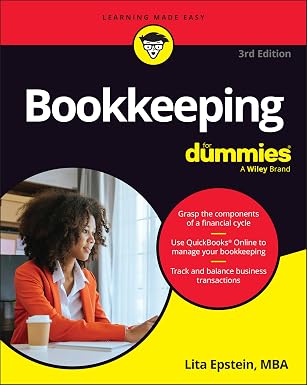
Bookkeeping For Dummies (For Dummies: Learning Made Easy)
A friendly, practical introduction to bookkeeping fundamentals - ledgers, journal entries, and everyday financial record-keeping made approachable for beginners.
Check PriceRelated Articles
AI Marketing Platform for Bookkeeping Businesses
Looking for an AI marketing platform for a bookkeeping business that is simple and affordable? This guide explains the features that matter most, practical automation ideas, and how to choose a platform without overspending.
Read Article →Bookkeeping Requirements for Small Businesses in the USA
Navigating federal compliance requires a disciplined approach to financial data. Discover the essential bookkeeping requirements every US entrepreneur must follow to scale safely.
Read Article →Small Business Bookkeeping Checklist: 2026 Guide
Transitioning from financial chaos to operational clarity requires a disciplined tracking routine. Use this comprehensive checklist to standardize your bookkeeping workflows.
Read Article →